 : Data and Information
That week looked very fresh for me. That was the starting week for my FSP study. I felt happy to meet all friends and also hesitate to attend the classes because of we chose subjects to study by our own. After I got into the IT class, lecturer passed the attendance list to sign. After I saw the attendance list, I felt better because my name was there.
Before lecturer taught us the lesson, we have had an ice breaking session. I could make many more friends and especially I could get to know my lecturer's sweet name is Nur Khairunnisha Zainal. After that she informed us about haw we get mark from this course and how many assignments, projects and examinations during classes. She also told us about the rules and regulations dos and don't in here class. She guided me very clear about all the information and I feel very gladsome to study with her.
About half an hour she finished everything about ice breaking, rules in class, course outline and references. She started the lesson of Introduction to Information Technology. She explained us the computer.
What is a Computer?
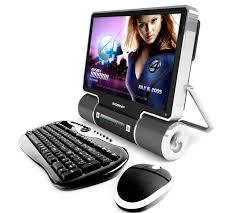
A computer is a programmable machine that carries out what it has been instructed to do.
After I knew about the computer, I also knew some of the operations of computers and they can perform:
- Input
- Processing
- Output
- Storage
- Communication
Evaluation of Computers
- First generation (1949-1950):: VACUUM TUBE
The first Electronic computer is ENIAC [1945]: it is an electronic Numerical Integrator and Computer.
2. Second generation (1950-1964):: TRANSISTERS
Vacuum Tubes have been replaced by transistors, and the most computer is IPM 1401. On the other hand, the high level languages (COBOL.Common business-Oriented Language and FORTRAN: formula translator).
3. Third generation (1964-1974): INTEGRATED CIRCUITS (IC)
Integrated circuits (microchip) combines thousands of transistors, entire circuit on one computer chip.
4. Fourth generation (1974-present):: VLSI/ULSI
- Fourth Generation computers are the modern computer.
5. Fifth generation (NOW AND THE FUTURE)
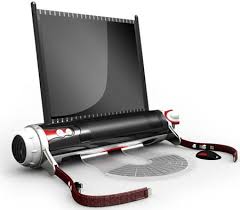

- Based on artificial intelligence-computer can think, reason and learn.
CATEGORIES OF COMPUTER
They are let me know and get more knowledge about IT. First, it makes me know about the type of computers and they are many types:
1- Embedded Computers
2- Mobile devices/ computers
3- Personal computer
4- Mid range
5- Mainframe computers
6- Supercomputers
In this section I have learned also about the difference between Data and Information.
Data: is raw facts, it can be in the form of numbers, characters, symbols, pictures or even sounds.
Information: is data that is organized and meaningful. There are many things in the information, such as input and output.
Input
Input is something put into a system or expended in its operation to achieve output or a result.
Output device
Is any piece of computer hardware equipment used to communicate the results of data processing carried out by an information procession system such as a (computer) which converts the electronically generated information into human-readable form. Or the act or process of producing, production. Data that has been processed into a useful form.
What is information management?
Information Management (IM) is the collection and management of information from one or more sources and the distribution of that information to one or more audiences.
A telecommunications Network is a collection of terminals, links and nodes which are connected through media to perform their communication assignments.
What is the Data and Information?
Data: is raw facts, it can be in the form of numbers, characters, symbols, pictures or even sounds.
Information: is data that is organized and meaningful. There are many things in the information, such as input and output.
Input
Input is something put into a system or expended in its operation to achieve output or a result.
Output device
Is any piece of computer hardware equipment used to communicate the results of data processing carried out by an information procession system such as a (computer) which converts the electronically generated information into human-readable form. Or the act or process of producing, production. Data that has been processed into a useful form.
What is information management?
Information Management (IM) is the collection and management of information from one or more sources and the distribution of that information to one or more audiences.
A telecommunications Network is a collection of terminals, links and nodes which are connected through media to perform their communication assignments.
Information Management
In term of technology, information management encompasses systems such as:- Web content management (WCM)
- Document management (DM)
- Records Management (RM)
- Digital Management (DAM)
- Learning Management System (LM)
- Learning Content Management System (LCM)


No comments:
Post a Comment